 ratminers.in
What Is Ebola?
Ebola Virus Disease (EVD) is a severe, often fatal viral infection caused by viruses from the Ebolavirus family. The disease affects humans and certain animals, especially primates and fruit bats.
The virus was first discovered in 1976 near the Ebola River in the Democratic Republic of the Congo (then known as Zaire). Since then, multiple outbreaks have occurred across Central and West Africa, with the 2026 Bundibugyo strain outbreak being the most recent public health emergency.
Why Is Ebola Dangerous?
Ebola is particularly dangerous for several reasons:
| Danger | Explanation |
|---|---|
| Direct contact spread | The virus spreads through infected bodily fluids, making close-contact environments high-risk |
| Severe bleeding & organ failure | Advanced stages cause hemorrhagic fever, internal bleeding, and multi-organ shutdown |
| High fatality rates | Depending on the strain, fatality can reach 50–90% without proper supportive care |
| Healthcare system overload | Outbreaks can quickly overwhelm fragile medical infrastructure, especially in remote regions |
How Ebola Spreads
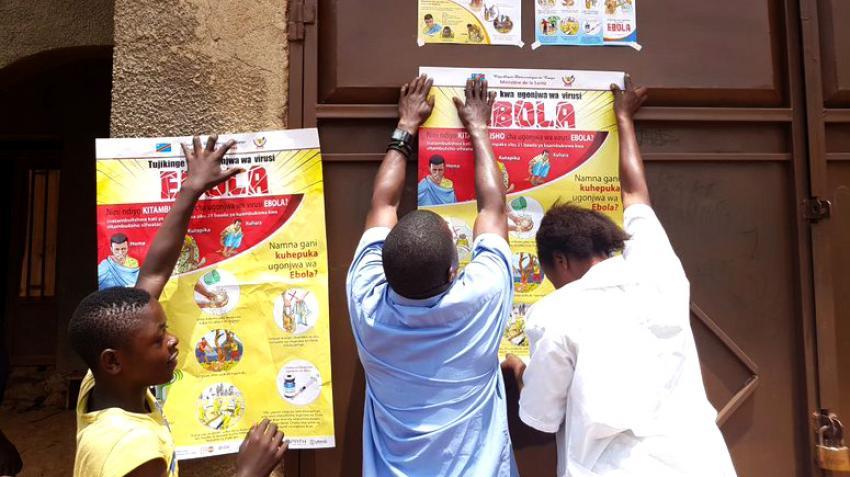
Understanding transmission is critical during any Ebola outbreak. Misinformation about how the virus spreads can lead to unnecessary fear or, conversely, inadequate precautions.
Ebola Is NOT Mainly Airborne
Unlike COVID-19 or influenza, Ebola does not usually spread through casual airborne transmission in normal daily interactions. You cannot catch Ebola by simply walking past an infected person in a market or on public transport.
The virus spreads mainly through direct contact with infected bodily fluids.
Main Ways Ebola Spreads
1. Contact With Bodily Fluids
Ebola spreads through direct contact with infected:
| Fluid | Risk Level |
|---|---|
| Blood | Extremely high |
| Vomit | High |
| Diarrhea | High |
| Saliva | Moderate to high |
| Sweat | Moderate |
| Urine | Moderate |
| Breast milk | High |
| Semen | High (persists for months after recovery) |
Even small exposures — such as a splash of vomit or contaminated sweat entering a cut or mucous membrane (eyes, nose, mouth) — can transmit infection.
2. Contact With Contaminated Surfaces (Fomites)
The virus may survive on surfaces for several hours to days, especially in cool, moist conditions. Transmission can occur through contaminated:
- Needles and syringes
- Bedding and linens
- Medical equipment
- Clothing
- Hospital surfaces (floors, bed rails, door handles)
Healthcare facilities without proper sterilization are particularly high-risk environments. This is why infection prevention and control (IPC) is a top priority during outbreaks.
3. Human-to-Human Transmission
Close physical contact with infected people greatly increases risk. Family caregivers and healthcare workers are especially vulnerable during outbreaks because they spend extended time near symptomatic individuals.
⚠️ Traditional burial rituals involving touching, washing, or kissing the deceased have contributed to major transmission events in past outbreaks (including 2014–2016). The body of an Ebola victim remains highly infectious.
4. Animal-to-Human Transmission (Zoonotic Spillover)
Scientists believe most outbreaks begin after humans come into contact with infected wildlife. The natural reservoir hosts are believed to be fruit bats, which can carry the virus without becoming sick.
Animals known to transmit Ebola to humans include:
- Fruit bats (natural reservoir)
- Chimpanzees
- Gorillas
- Forest antelope (duikers)
Handling, butchering, or eating infected bushmeat is a known route of spillover. This is why public health campaigns often advise avoiding wild animal meat during outbreaks.
Symptoms of Ebola Virus Disease
Symptoms usually appear 2 to 21 days after exposure. The average incubation period is 8–10 days. A person is not contagious until symptoms begin.
Early Symptoms (Days 1–3)
These mimic many common illnesses, making early diagnosis difficult:
- Sudden onset fever (≥38°C / 100.4°F)
- Severe fatigue and weakness
- Muscle pain (myalgia)
- Headache
- Sore throat
Advanced Symptoms (Days 4–10+)
As the disease progresses, symptoms become more severe and distinctive:
| Symptom | Description |
|---|---|
| Vomiting | Often severe and persistent |
| Diarrhea | Watery, can lead to rapid dehydration |
| Rash | Red, non-itchy rash often appears on the trunk |
| Internal bleeding | Bleeding from gums, nose, or internally (hemorrhagic phase) |
| Organ failure | Liver, kidneys, and other organs begin to shut down |
| Shock | Septic or hypovolemic shock due to fluid loss |
Without intensive supportive care, Ebola can rapidly become fatal. Death typically occurs 6–16 days after symptoms begin, usually from shock, multi-organ failure, or severe blood loss.
Travel Advisory for Ebola-Affected Regions
If you are planning travel to or currently in an Ebola-affected area (such as Ituri Province in DRC or border regions of Uganda), follow these precautions:
For Travelers
- ✅ Monitor WHO and CDC updates daily before and during travel
- ✅ Avoid non-essential travel to active outbreak zones (Level 3 or 4 advisories)
- ✅ Practice strict hygiene – wash hands frequently with soap or alcohol-based sanitizer
- ✅ Avoid healthcare facilities unless absolutely necessary (hospitals can be transmission hotspots)
- ✅ Avoid contact with sick people, corpses, or wild animals
- ✅ Do not eat bushmeat or handle bats/primates
After Returning
- ✅ Monitor symptoms for 21 days after leaving the affected area
- ✅ If you develop fever, fatigue, vomiting, or bleeding:
- Isolate immediately
- Call your doctor or local health department before visiting – do not walk into a clinic unannounced
- Report your travel history clearly
Ebola Vaccines and Treatment
There is no simple cure for Ebola, but early, aggressive supportive care greatly improves survival rates.
Treatment (Supportive Care)
Patients receive intensive care to maintain organ function while the immune system fights the virus:
- IV fluids to prevent dehydration
- Oxygen support for respiratory distress
- Electrolyte correction to balance sodium, potassium, etc.
- Blood pressure management with medications
- Treatment of secondary infections (antibiotics for bacterial superinfections)
- Kidney support (dialysis if available)
Vaccines
For the Zaire ebolavirus (the most common strain):
- rVSV-ZEBOV (Ervebo®) – single-dose, highly effective (99%+ antibody response)
- Ad26.ZEBOV + MVA-BN-Filo – two-dose regimen
For the Sudan virus – clinical trials began in 2025; no licensed vaccine yet.
For the Bundibugyo virus (causing the 2026 outbreak) – no licensed vaccine exists. This is why the current outbreak is particularly concerning.
💡 Vaccines developed after the 2014 outbreak have dramatically improved outbreak control for the Zaire strain, but other strains remain unprotected.
WHO and CDC Response
Global health organizations coordinate rapid responses to contain Ebola outbreaks. Their work includes:
| Organization | Role |
|---|---|
| World Health Organization (WHO) | Declares Public Health Emergencies (PHEIC), coordinates international response, deploys experts |
| U.S. CDC | Provides technical guidance, laboratory support, and travel advisories |
| Africa CDC | Supports African Union member states with surveillance, testing, and response teams |
| Local Ministries of Health | On-the-ground outbreak control, contact tracing, safe burials, vaccination (where available) |
Key Response Activities
- Surveillance – Finding and tracking every case
- Laboratory testing – Rapid PCR confirmation
- Vaccination campaigns – Ring vaccination for Zaire strain outbreaks
- Border screening – Temperature checks and health questionnaires
- Emergency response teams – Deployed to epicenters within days
Lessons from the 2014–2016 West Africa epidemic (which killed over 11,000 people) dramatically improved global preparedness, including faster funding, better PPE protocols, and community engagement strategies.
Why Ebola Remains a Global Threat
Despite medical advances, Ebola continues to pose a major public health threat. Here is why:
| Reason | Explanation |
|---|---|
| High mortality rates | Even with care, fatality remains 30–50% for some strains |
| Outbreaks in remote areas | Weak infrastructure delays detection and response |
| Healthcare system fragility | Many affected regions lack staff, supplies, and isolation units |
| Wildlife reservoirs | Bats continuously carry the virus, making elimination impossible |
| Population movement | Cross-border travel spreads outbreaks before they are detected |
| Conflict zones | Insecurity (e.g., Ituri Province) prevents responders from reaching patients |
Future Risks
Climate change and deforestation are increasing human-wildlife contact, potentially leading to more frequent spillover events. As forests shrink and people move into bat habitats, the risk of new Ebola outbreaks grows.
Conclusion
The 2026 Ebola outbreak in the Democratic Republic of the Congo — caused by the Bundibugyo strain — shows that Ebola Virus Disease continues to pose a major public health threat. While global preparedness has improved significantly since the catastrophic 2014 Ebola outbreak, outbreaks in Central Africa remain difficult to control due to:
- Ongoing conflict and insecurity
- Limited healthcare resources in remote areas
- Rapid population movement across borders
- The lack of a vaccine for this particular strain
Key Takeaways
Understanding these essential facts can save lives:
- ✅ How Ebola spreads – Direct contact with bodily fluids, not casual airborne transmission
- ✅ Recognizing symptoms early – Fever, fatigue, vomiting, diarrhea, bleeding
- ✅ Following precautions – Hand hygiene, avoiding contact with sick people/corpses, safe burials
- ✅ Supporting rapid outbreak response – Surveillance, contact tracing, isolation, and international coordination
Ebola is not a virus to fear irrationally — but it is one to respect deeply. With accurate knowledge, proper precautions, and swift public health action, future Ebola epidemics can be contained and lives can be saved.
📚 Trusted Resources for Current Information
- World Health Organization (WHO): www.who.int
- U.S. CDC Ebola page: www.cdc.gov/vhf/ebola
- Africa CDC: africacdc.org
- DRC Ministry of Health: Follow local announcements
Last updated: May 2026 | Based on current Bundibugyo outbreak data and general Ebola knowledge