 ratminers.in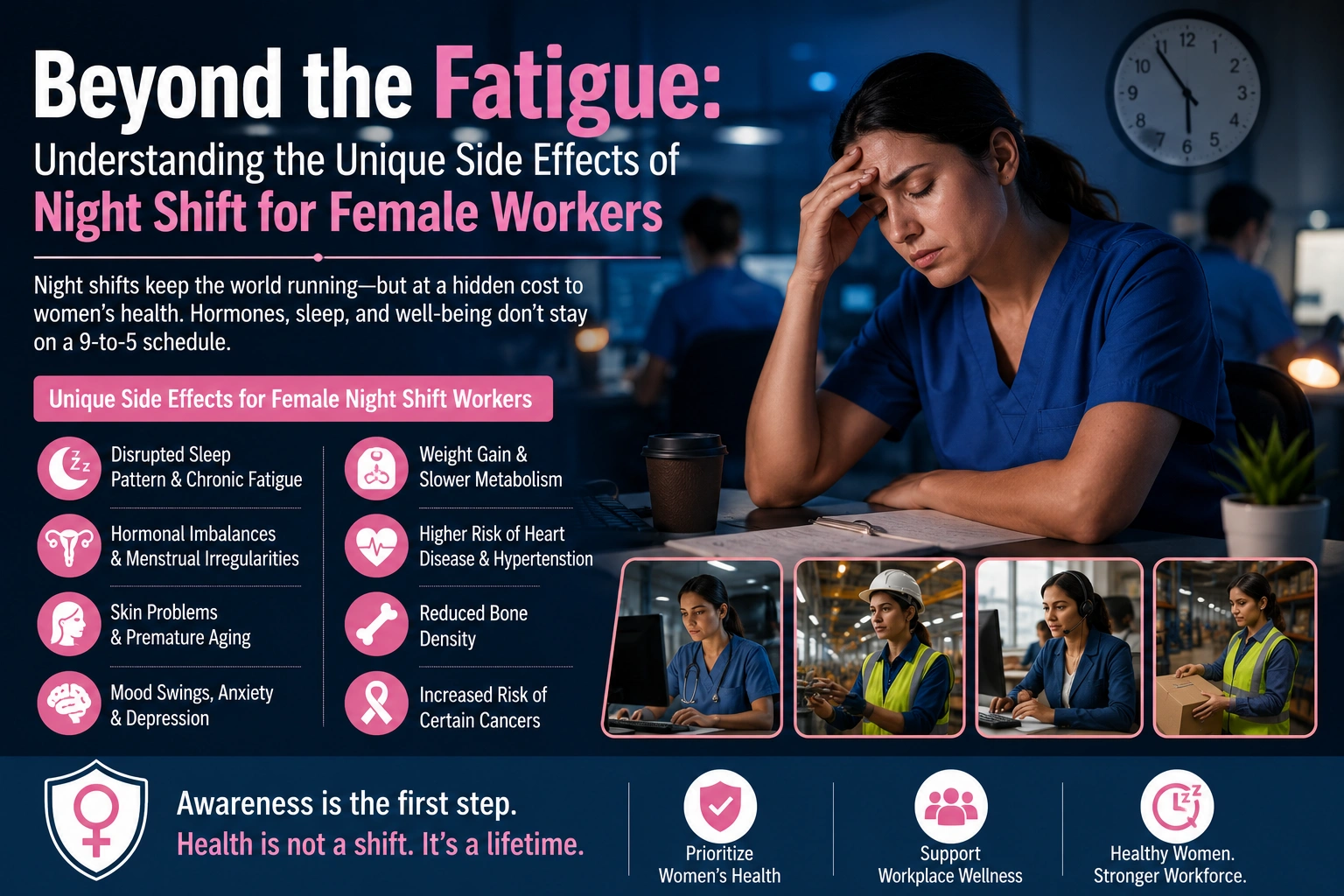
For millions of women, working through the night is a necessity—not a choice. From healthcare workers on 12-hour rotations to factory operators, call center agents, and logistics coordinators, the modern economy runs 24/7. While the paycheck might be steady, the biological clock is not. The side effects of night shift for female bodies are often more severe, more varied, and longer-lasting than many realize.
While men also struggle with night work, women face a unique constellation of health risks due to hormonal fluctuations, reproductive health, and differing metabolic responses. Understanding the side effects of night shift for female workers is critical—not just for individual health, but for employers who depend on them.
Here is what every female shift worker—and her employer—needs to know.
1. The Menstrual Cycle Disruption
One of the most immediate side effects of night shift for female employees is menstrual irregularity. The body’s circadian rhythm directly governs melatonin and cortisol, which interact with estrogen and progesterone.
When a woman stays awake all night, this delicate dance is thrown off. Studies show that female night shift workers are significantly more likely to experience irregular or missed periods, increased menstrual pain, and longer or shorter cycles. This isn’t just an inconvenience—chronic cycle disruption can mask underlying reproductive issues.
2. Fertility Challenges and Pregnancy Risks
Perhaps the most alarming data concerns fertility. Research indicates that women working rotating night shifts take longer to get pregnant than those working day shifts. Furthermore, the side effects of night shift for female employees who become pregnant are sobering, including higher rates of preterm birth, increased risk of miscarriage, and gestational hypertension.
The theory is that disrupted circadian rhythms affect placental function. Many doctors now explicitly advise pregnant women to request off night duty, recognizing that the side effects of night shift for female reproduction are not worth the risk.
3. Increased Risk of Breast Cancer
The International Agency for Research on Cancer reaffirms that night shift work is “probably carcinogenic to humans.” For women, the primary concern is breast cancer. Melatonin—suppressed by artificial light—helps suppress tumor growth. By working through darkness, female shift workers reduce melatonin production by as much as 80%.
Meta-analyses have found that women working night shifts for more than 20 years have a 40% higher risk of breast cancer. This is not a minor side effect of night shift for female health—it is a major occupational hazard.
4. Metabolic Mayhem: Weight Gain and Diabetes
Women have different glucose metabolisms than men. Unfortunately, the side effects of night shift for female metabolism are disproportionately harsh. Because women require more deep sleep for hormonal repair, chronic sleep deprivation leads to cravings for high-carb foods and reduced insulin sensitivity.
The result? Female night shift workers gain weight faster than their male counterparts and have a 60% higher risk of developing type 2 diabetes. Eating at 3 AM while trying to sleep at 10 AM creates a perfect metabolic storm—another overlooked side effect of night shift for female workers.
5. Mental Health: Depression and Anxiety
While anyone can feel blue after a sleepless night, women are twice as likely as men to develop anxiety and depression in response to circadian disruption. The social isolation of night work compounds this. Women often bear the “double shift”—working all night, then caring for family during the day. Over time, this emotional load manifests as clinical depression, a serious side effect of night shift for female mental health.
6. Heart Disease and Stroke Risk
A massive study found that women who worked night shifts for five years or more had a 25% higher risk of dying from cardiovascular disease. The side effects of night shift for female hearts include sustained high blood pressure, chronic inflammation, and an increased tendency for blood clots. For women with underlying risk factors, night work can accelerate vascular damage.
What Can Be Done?
Acknowledging the side effects of night shift for female workers is the first step. The second is action:
- For employers: Limit consecutive night shifts to three, provide bright-light therapy, offer dark sleeping areas, and consider rotating shifts forward (day→evening→night).
- For women on night shift: Prioritize blackout curtains, eat protein-rich meals instead of midnight pizza, check vitamin D levels, and listen to your body. If periods stop or anxiety spikes, seek medical advice.
The Night Owl’s Survival Guide: Managing Long-Term Impacts
In our previous article, we explored the serious side effects of night shift for female workers—from hormonal disruption to increased risks of diabetes and heart disease. The picture can feel bleak, but you can significantly reduce the damage.
Mastering Strategic Sleep
- Create a chamber of darkness with blackout curtains and white noise. Consistent deep sleep reduces the cumulative cortisol load that drives many side effects of night shift for female bodies.
- Use strategic light exposure: Wear wraparound sunglasses on your drive home, and use bright light before a shift.
Nutritional Defense
Given that the side effects of night shift for female metabolism include a 60% higher risk of type 2 diabetes, your fork is your best medicine. Create a 12-hour eating window, avoid large meals between midnight and 6 AM, and pack protein-first lunches.
Protecting Reproductive Health
Given the risks of menstrual disruption and breast cancer, female shift workers need proactive monitoring. Track your cycle religiously and prioritize breast health. If you miss three periods in six months, do not accept “it’s just shift work” as an answer. That is a dangerous side effect of night shift for female health that requires medical attention.
Cardiovascular and Mental Health Defense
Request a “shift worker’s physical” annually, including an HbA1c test and lipid panel. Monitor your mood weekly. Isolation is a silent long-term side effect of night shift for female mental health—schedule at least two daytime social activities per week.
Long-Term Career Management
Research shows that health risks spike after the 4th consecutive night shift. Limit your schedule to no more than three nights in a row. For many women, perimenopause makes night work exponentially harder, as falling estrogen levels reduce stress resilience. It is not failure to admit you cannot do nights forever.
The Final Truth
We cannot eliminate night work—hospitals and factories will always need overnight staff. But we can stop pretending that the side effects of night shift for female bodies are the same as for males. They are different, more severe, and require targeted protection.
For the millions of women powering our 24-hour world: your health is not a fair trade for your paycheck. Advocate for shift schedules that respect your biology. The night may be quiet, but the side effects of night shift for female workers are not.
Disclaimer: This article is for informational purposes only. If you work night shifts and experience concerning symptoms, consult a healthcare professional.