
 ratminers.in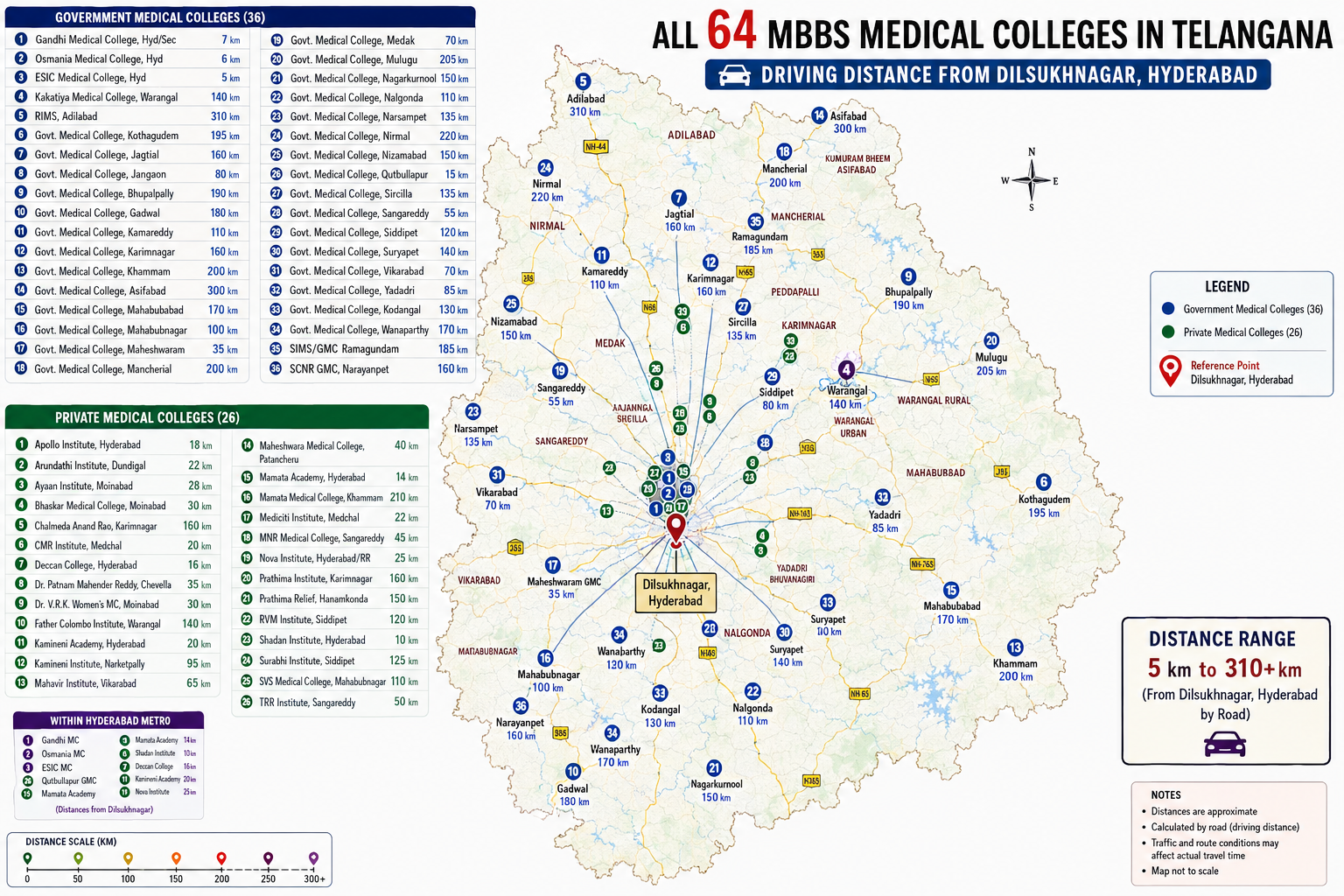
📑 Table of Contents
1. Introduction
Choosing a medical college is one of the most pivotal decisions in a student’s life, a choice that will shape their career and personal development for years to come. For many students and their families in India, particularly when considering the competitive landscape of NEET UG counselling, one of the most immediate and pressing questions is not just about the college’s reputation, but about its location: Should I choose a medical college near home or venture farther away?
This decision is often a complex balancing act involving academic aspirations, personal comfort, financial considerations, and even societal expectations, which can sometimes differ for male and female students. For instance, recent data from Telangana’s 2026 counselling cycle shows a clear preference for top local institutions. Top NEET rankers like Kompella Sai Gayathri Tejo Aruna, who secured an impressive All India Rank of 83, chose Gandhi Medical College in Secunderabad, while other toppers opted for Osmania Medical College in Hyderabad. This suggests that when high-ranking students have a choice, prestigious colleges close to home often become the default top pick.
But is proximity always the best path, or does moving away offer unique advantages that can foster independence and a broader worldview? This article explores the multifaceted arguments for and against attending a medical college near home versus far away, taking into account the unique challenges and opportunities for both male and female students. We will delve into gender-based perspectives, academic trade-offs, and the specific procedures of the Kaloji Narayana Rao University of Health Sciences (KNRUHS) for the 2026-27 academic year to help you make an informed decision.
If you find our analysis helpful, click the button above to add us as a Preferred Source in Google.
2. Telangana Government Medical Colleges & Approximate Distances from Hyderabad
To help you visualize the “near vs far” decision, here is a list of government medical colleges in Telangana with their approximate distances from Hyderabad/Secunderabad. These values are indicative only and meant to give you a relative sense of location.
🏥 Government Medical Colleges in Telangana
Distances are approximate from Hyderabad city center. ● Near (< 50 km) · ● Mid (50–150 km) · ● Far (> 150 km)
| # | College Name | Approx. Distance (km) | Category |
|---|---|---|---|
| 1 | Gandhi Medical College, Secunderabad | 7 km | Near |
| 2 | Osmania Medical College, Hyderabad | 6 km | Near |
| 3 | ESIC Medical College, Hyderabad | 5 km | Near |
| 4 | Govt. Medical College, Maheshwaram | 35 km | Near |
| 5 | Govt. Medical College, Suryapet | 45 km | Near |
| 7 | Govt. Medical College, Medak | 70 km | Mid |
| 8 | Govt. Medical College, Vikarabad | 70 km | Mid |
| 9 | Govt. Medical College, Jangaon | 80 km | Mid |
| 10 | Govt. Medical College, Yadadri | 85 km | Mid |
| 11 | Govt. Medical College, Mahabubnagar | 100 km | Mid |
| 12 | Govt. Medical College, Nagarkurnool | 105 km | Mid |
| 13 | Govt. Medical College, Sivapuri | 130 km | Mid |
| 14 | Kakatiya Medical College, Warangal | 140 km | Mid |
| 15 | Govt. Medical College, Ramagundam | 140 km | Mid |
| 16 | Govt. Medical College, Jagital | 160 km | Far |
| 17 | Govt. Medical College, Karimnagar | 160 km | Far |
| 18 | Govt. Medical College, Mahabubabad | 170 km | Far |
| 19 | Govt. Medical College, Wanaparthy | 175 km | Far |
| 20 | Govt. Medical College, Gadwal | 180 km | Far |
| 21 | Govt. Medical College, Bhupalpally | 190 km | Far |
| 22 | Govt. Medical College, Kothagudem | 195 km | Far |
| 23 | Govt. Medical College, Khammam | 200 km | Far |
| 24 | Govt. Medical College, Mancherial | 200 km | Far |
| 25 | Govt. Medical College, Narayanpet (SCNR GMC) | 200 km | Far |
| 26 | Govt. Medical College, Mulugu | 205 km | Far |
| 27 | Govt. Medical College, Nirmal | 220 km | Far |
| 28 | Govt. Medical College, Asifabad | 300 km | Far |
| 29 | RIMS, Adilabad | 310 km | Far |
Note: This list is compiled from available data and may not be exhaustive. A few colleges may have been missed or their locations/distances mapped approximately. Please verify exact locations from official sources.
3. The Proximity Factor: Why Distance Matters More Than You Think
The distance between a student’s home and their medical college is more than just a logistical detail; it is a significant variable that can impact their well-being, academic performance, and even their choice to apply in the first place. Research from other countries, such as Japan, indicates that distance is a significant factor, with female students often incurring greater “costs” associated with distance compared to their male counterparts. This research suggests that gender differences in the preference for distance are a real phenomenon that influences college choice decisions in developed nations. While the exact social dynamics might differ, the core principle remains relevant: the perceived burden of distance can disproportionately affect students, often influenced by gender-based expectations.
It is important to understand that “distance” here is not merely about kilometers on a map. It encompasses travel time, accessibility of transportation, cost of commuting, availability of accommodation, and the emotional toll of being away from one’s support system. A college that is 30 kilometers away in a city with poor public transport may feel “farther” than a college 100 kilometers away in a well-connected town. Therefore, when we speak of “near” versus “far,” we are referring to the overall convenience and lifestyle impact rather than a strict geographical measurement.
4. The Case for Staying Close to Home: Benefits and Considerations
The “near home” option carries significant weight for many students. Here’s a breakdown of the pros and cons:
Advantages
- Emotional and Psychological Comfort: Medical school is notoriously stressful. Having a familiar support system—family and childhood friends—nearby can be a crucial buffer against burnout and anxiety.
- Financial Economy: Staying close to home can drastically reduce costs related to hostels, food, and transportation. This is a major consideration, especially given the high fees of private medical colleges.
- Familiar Environment: A known environment means less time spent adapting to a new city and more time focusing on studies.
- Safety and Security: For many families, especially those with daughters, a college close to home offers a sense of safety and allows for parental oversight, which can be a powerful deciding factor.
Disadvantages
- Limited Exposure: Staying in a familiar comfort zone can limit personal growth and the opportunity to experience different cultures, healthcare systems, and lifestyles.
- Distractions and Responsibilities: The proximity to home might lead to frequent interruptions, family obligations, or a lack of the “independent” mindset required to navigate the rigors of medical training.
5. The Case for Branching Out: Benefits of Distance
For others, the allure of a new city and an independent life is a primary motivator.
Advantages
- Fostering Independence: Moving away forces students to manage their own lives, finances, and schedules, building crucial life skills and resilience early in their careers.
- Broadened Perspectives: Exposure to a new region, state, or culture can provide a wider worldview, which is invaluable in a field as people-centric as medicine.
- Expanded Professional Network: Studying away from home allows a student to build a professional network in a new geography, potentially opening doors for postgraduate opportunities and future careers.
Disadvantages
- Homesickness and Isolation: Being far from one’s support network can lead to loneliness, especially during the initial challenging months of medical school.
- Increased Expenses: Hostel fees, travel costs to visit home, and the higher cost of living in a new city can be substantial.
- Logistical Challenges: Navigating a new city, finding accommodation, and dealing with administrative procedures independently can be daunting.
6. A Gendered Perspective: Do Girls and Boys Weigh Distance Differently?
This is where the decision often takes on a gendered dimension, shaped by societal expectations and safety concerns. The practical implications of distance are not always gender-neutral.
- For Female Students: Often, families are more protective of their daughters. A “near home” college can alleviate concerns about safety and provide peace of mind. A study on educational access found that issues like harassment during commutes can negatively impact whether young women are allowed to apply for higher education. Therefore, for many girls and their families, proximity is not just a preference but a non-negotiable requirement for them to pursue a medical career. The research from Japan echoes this by showing that the “cost” of distance is higher for female students, implying that societal constraints may influence this preference.
- For Male Students: While the desire to explore and be independent is universal, male students may face less familial resistance to moving away. Families might be more willing to let their sons relocate for a “better” college, even if it is far from home. The research suggests that the burden of distance is often felt more acutely by female applicants, which could be attributed to various social factors.
It is crucial to note that these are broad generalizations. Individual personalities, family dynamics, and personal goals often trump societal norms.
7. Essential Factors Beyond Distance: Academic Fit, Reputation, and Opportunities
While distance is a critical factor, it should never be the only one. The 2026 KNRUHS counselling data shows that the most coveted colleges in Telangana, like Gandhi Medical College and Osmania Medical College, require extremely high NEET scores—expected cutoffs upwards of 675 and 680 for the general category. Before deciding on location, a student must consider:
- College Reputation and Ranking: A prestigious college with a strong academic curriculum, experienced faculty, and excellent clinical exposure can set the foundation for a stellar career. Students often prioritize a college’s reputation over its location.
- NEET Cut-off and Merit Rank: Your All India Rank (AIR) and state merit list position are the primary determinants of which colleges you can even consider. The 2026 KNRUHS state merit list included over 38,000 qualified candidates vying for approximately 10,250 MBBS seats across the state. The competition is fierce.
- Clinical Exposure and Infrastructure: A college attached to a major hospital offers better clinical training and exposure to a wide variety of medical cases.
Ultimately, the choice may not be between a “good college near home” and a “poor college far away,” but rather between a “good college near home” and a “slightly better college far away.” You must weigh the marginal benefits of a slightly better college against the intangible costs of distance.
8. KNR University 2026 Seat Allotment: Semantic FAQs
The seat allotment process through KNRUHS is a critical step in turning a college choice into a reality. Here are some frequently asked questions based on the 2026 counselling procedures.
In the first phase of counselling for the 2026-27 academic year, KNRUHS allotted a total of 3,366 MBBS seats under the Competent Authority Quota across government and private medical colleges in Telangana.
Students who were allotted a seat in the first phase of the KNRUHS counselling were required to report to their allotted college, pay the tuition fees, and submit their original certificates to the principal by September 8, 2026, at 4:00 PM. Failure to do so would result in the seat being cancelled.
Candidates can check their seat allotment status by visiting the official KNRUHS website: https://www.knruhs.telangana.gov.in/. The college-wise allotment list is often released as a PDF that can be searched using the candidate’s NEET UG roll number or name.
Allotted candidates must bring original documents for verification, including: NEET UG 2026 admit card and scorecard, Class 10 and 12 marksheets, Transfer Certificate, Caste/Category certificate (if applicable), Residence/Local status certificate, Income certificate, Aadhaar card, KNRUHS registration receipt, the seat allotment order, and fee payment receipt.
Candidates who fail to report by the specified deadline will have their Phase 1 seat allotment cancelled. Furthermore, they may become ineligible to participate in subsequent counselling rounds. It is therefore crucial to complete the joining formalities on time.
Based on the 2026 counselling data, the expected NEET UG cut-off scores for top government colleges were very high:
- Gandhi Medical College: 680–695+
- Osmania Medical College: 675–690+
- Kakatiya Medical College: 650–665+
9. Conclusion: Making the Right Decision
The debate between a medical college near home versus one far away has no single right answer. It is a highly personal decision that should be based on a student’s academic goals, career aspirations, financial situation, and personal temperament.
- For students who thrive on family support and prefer a more familiar environment, choosing a college near home can be the key to navigating the rigors of medical school successfully.
- For those who are eager for independence and want to expand their horizons, moving away can be a profoundly enriching experience that builds character and resilience.
The decision may also be influenced by the importance of gender in the family’s decision-making process, with female students sometimes facing stricter expectations to stay close to home. Ultimately, if given a choice between a comparable college near home and one far away, the practical and emotional benefits of staying close are often compelling. However, if the “far away” college offers a significantly superior education and better career prospects, taking the leap might just be the best decision for a student’s future. Use the KNRUHS counselling data to understand your position, weigh your options carefully, and choose the path that aligns best with your vision for yourself.
10. Disclaimer & Disclosure
General Disclaimer
The information provided in this article is for general informational and educational purposes only and does not constitute professional medical, academic, or legal advice. While we have made every effort to ensure the accuracy of the information presented—including KNRUHS counselling data, NEET cut-off expectations, and seat allotment procedures—these details are based on publicly available sources and may be subject to change without prior notice. Readers are strongly advised to verify all critical information, including counselling schedules, document requirements, and college-specific policies, directly from the official KNRUHS website (https://www.knruhs.telangana.gov.in/) and the National Testing Agency (NTA) official notifications. The views expressed regarding gender-based preferences and the “near home vs far away” debate are analytical perspectives and should not be interpreted as definitive recommendations. Every student’s situation is unique, and we encourage you to consult with family members, academic counselors, and trusted mentors before making any final decisions regarding college selection.
Disclosure
This article may contain affiliate links or references to third-party products, services, or websites. If you click on these links and make a purchase or take action, we may earn a small commission at no additional cost to you. However, our primary commitment is to providing honest, unbiased, and high-quality content to our readers. We do not accept payment or incentives in exchange for favorable reviews or endorsements of any specific college, university, or counselling service mentioned in this article. The inclusion of the “Google Preferred Source” button is a standard implementation provided by Google for publishers and does not indicate any endorsement by Google of the content or opinions expressed herein. We are an independent publisher and are not affiliated with KNRUHS, NTA, or any government body. All data and statistics cited are attributed to their respective sources and are used for reference purposes only.