 ratminers.in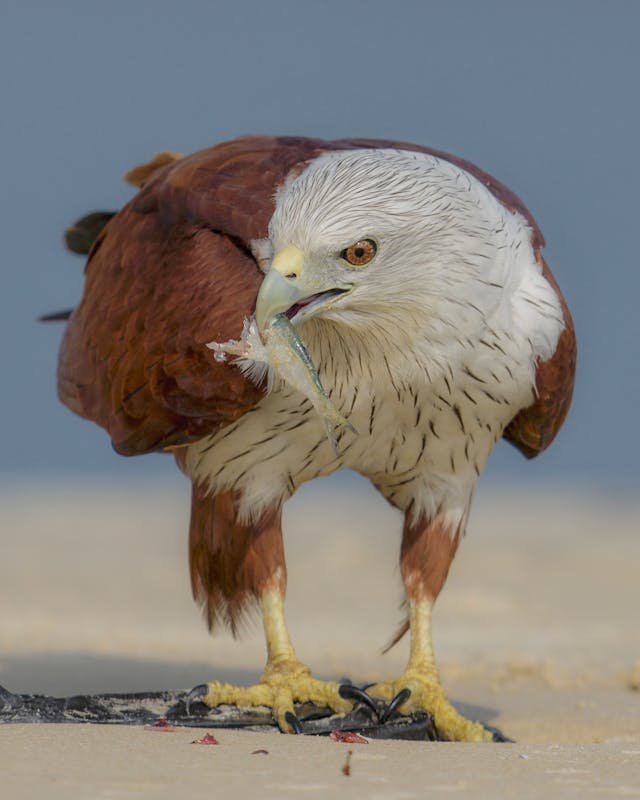
In the world of pursuit and evasion, few hunters possess capabilities as remarkable as the eagle. Soaring thousands of feet above rugged terrain, these apex predators routinely spot, track, and intercept prey moving through complex environments — a feat that has captured human imagination for millennia. But beneath this natural spectacle lies an extraordinary system of biological signal processing that rivals the most sophisticated military guidance systems. This article examines how eagles track moving prey at extreme distances through the lens of modern signal processing, revealing principles that inform everything from radar systems to autonomous drone navigation.

The Optical Front End: Resolution Beyond Human Limits
Before any tracking algorithm can function, the sensor must capture usable data. The eagle eye represents the pinnacle of biological optical engineering. While humans possess visual acuity around 30 to 60 cycles per degree (cpd), eagles achieve an astonishing 100 to 142 cpd — effectively two to four times sharper than human vision. The wedge-tailed eagle (Aquila audax) demonstrates maximum acuity between 132 and 143 cpd, approaching the theoretical diffraction limit of its own optical system.
To understand this in signal processing terms, consider the eagle’s retina as a sensor array. The deep fovea — a specialized retinal pit — functions as a region of extreme pixel density, analogous to a modern camera’s high-resolution center crop. Anatomical measurements reveal photoreceptor spacing that, when combined with the eye’s posterior nodal distance, yields a calculated maximum anatomical resolving power matching behavioral measurements. This represents near-optimal sampling: the eagle’s visual system operates at the Shannon-Nyquist limit for its optical aperture.
Active Stabilization: The Saccadic Tracking Loop
High-resolution optics alone cannot track moving targets without an exceptional stabilization and targeting system. Eagles employ a sophisticated saccadic eye movement strategy that differs dramatically from other bird species. Research comparing the little eagle (Haliaetus morphnoides) with the tawny frogmouth reveals that eagles make saccades ten times more frequently than their camouflage-specialized counterparts.
This high-frequency saccadic behavior functions as an active tracking loop. Each saccade represents a discrete sampling event, redirecting the high-acuity fovea to maintain target lock. Importantly, most eagle saccades move both eyes in the same direction, preserving binocular convergence on the target despite not being perfectly conjugate. This biological implementation mirrors a tracking radar system that continuously updates its pointing vector to maintain lock on a maneuvering target.
The Flapping Signature: Micro-Doppler in Nature
When prey moves through the air or across terrain, it generates characteristic motion signatures. For avian targets, the flapping motion of wings creates distinctive micro-Doppler patterns — a concept directly applied in modern radar signal processing. Recent research in radar bird target detection has established that bird targets can be modeled through their flapping wing kinematics, generating predictable radar echo signals and micro-Doppler signatures.
From a signal processing perspective, an eagle tracking a bird in flight must solve a problem mathematically equivalent to radar micro-Doppler detection. The prey’s wingbeats produce periodic modulations in the reflected signal (whether optical or electromagnetic), allowing the predator to:
- Distinguish between different prey species based on wingbeat frequency
- Predict future position based on periodic motion patterns
- Reject clutter from stationary background objects
Advanced radar systems now employ time-frequency domain analysis using short-time Fourier transforms (STFT) to detect these signatures, followed by Bayesian enhancement algorithms to extract weak micro-Doppler features from noisy backgrounds. The eagle’s neural processing likely implements analogous computational strategies — integrating visual signals over time to enhance periodic patterns while suppressing irrelevant motion.
Guidance Law: Proportional Navigation in Biological Form
Perhaps the most mathematically elegant aspect of eagle tracking is the pursuit strategy itself. The guidance law known as proportional navigation (PN) — widely used in homing missiles — describes a simple but optimal pursuit algorithm: the pursuer turns with an angular rate proportional to the angular rate of the line-of-sight to the target.
Formally, the proportional navigation guidance law states:θ˙p=N⋅λ˙θ˙p=N⋅λ˙
Where:
- θ˙pθ˙p is the pursuer’s turn rate
- λ˙λ˙ is the line-of-sight turn rate
- NN is the navigation constant (typically 3 to 5 in missile systems)
Game-theoretic analysis reveals that proportional navigation represents an optimal homing strategy against moving targets. Eagles appear to employ this same guidance law through what biologists term the “ground stabilization” strategy — maintaining the prey’s image stationary on the retina while adjusting flight path accordingly. This is functionally equivalent to a closed-loop tracking system with proportional control.
The Evasion Problem: Jinking and Counter-Tracking
No discussion of pursuit tracking is complete without considering the adversarial perspective. Optimal evasion theory demonstrates that the most effective countermeasure against a proportional navigation pursuer is the jink — a sequence of perfectly timed, high-G turns in alternating directions. This strategy exploits the finite bandwidth of the pursuer’s tracking loop, forcing overshoot and increasing miss distance.
Prey species targeted by eagles have evolved various jinking behaviors. Rabbits execute sudden direction changes mid-leap. Waterfowl perform rapid rolling turns. Songbirds employ erratic flight paths. Each evasion strategy represents a disturbance input to the eagle’s tracking system, testing the limits of its closed-loop control bandwidth.
Neural Implementation: Beyond Linear Filtering
The eagle’s nervous system must solve these tracking problems with constraints no man-made system faces. Neurons operate slowly compared to electronic circuits. Visual processing bandwidth is limited by retinal ganglion cell density and optic nerve capacity. Yet the eagle achieves performance that, in some respects, exceeds man-made systems.
This suggests computational principles beyond simple linear filtering. The eagle’s visual system likely employs:
Adaptive Kalman-like filtering: Estimating target state (position, velocity, acceleration) with uncertainty models that adapt to prey behavior
Predictive coding: Anticipating prey movement based on observed motion patterns, effectively reducing tracking lag
Multi-modal integration: Combining visual cues with vestibular and proprioceptive feedback to maintain stable target lock during the eagle’s own maneuvering
Engineering Implications: Lessons for Autonomous Systems
The biological tracking strategies employed by eagles offer valuable insights for autonomous systems development:
Biologically-inspired sensor design: The eagle eye’s combination of wide-field panoramic vision with a high-resolution foveal region suggests optimal sensor architectures for autonomous tracking applications. Modern electro-optical/infrared (EO/IR) systems increasingly employ similar dual-resolution designs.
Time-frequency processing for target discrimination: The eagle’s ability to distinguish prey by motion signatures parallels emerging radar and optical tracking algorithms that use micro-Doppler and kinematic feature extraction.
Robust guidance under uncertainty: Proportional navigation’s elegance lies in requiring only line-of-sight rate measurements, not range or time-to-go information. This robustness to uncertain target range mirrors the eagle’s biological constraints.
Conclusion
The eagle’s ability to track moving prey from extreme distances represents one of nature’s most sophisticated signal processing systems. From optical sensor design at the diffraction limit to closed-loop guidance laws that mirror optimal homing theory, these birds embody principles that engineers continue to rediscover. As autonomous systems advance toward operating in complex, contested environments, the eagle’s example reminds us that elegant solutions to tracking problems have existed in nature for millions of years — waiting, perhaps, for engineers to learn the underlying signal processing principles that make them work.
References
[1] Yang, L., Sun, W., Mao, X., et al. (2024). Bayesian enhancement algorithm for micro-Doppler feature of radar bird target. Systems Engineering and Electronics, 46(2), 505-516.
[2] Wallman, J., & Pettigrew, J.D. (1985). Conjugate and disjunctive saccades in two avian species with contrasting oculomotor strategies. Journal of Neuroscience, 5(6), 1418-1428.
[3] Girard, A.R., & Kabamba, P.T. (2015). Proportional navigation: Optimal homing and optimal evasion. SIAM Review, 57(4), 611-624.
[4] Harvard University BioNumbers Database. Spatial resolving power of various bird species.
[5] Reymond, L. (1985). Spatial visual acuity of the eagle Aquila audax: A behavioural, optical and anatomical investigation. Vision Research, 25(10), 1477-1491.
[6] Tekin, R., & Erer, K.S. (2023). Biased proportional navigation with decaying error for 3D impact angle control. 2023 9th International Conference on Control, Decision and Information Technologies (CoDIT), 847-852.